


 Dec 06, 2025
 3 min read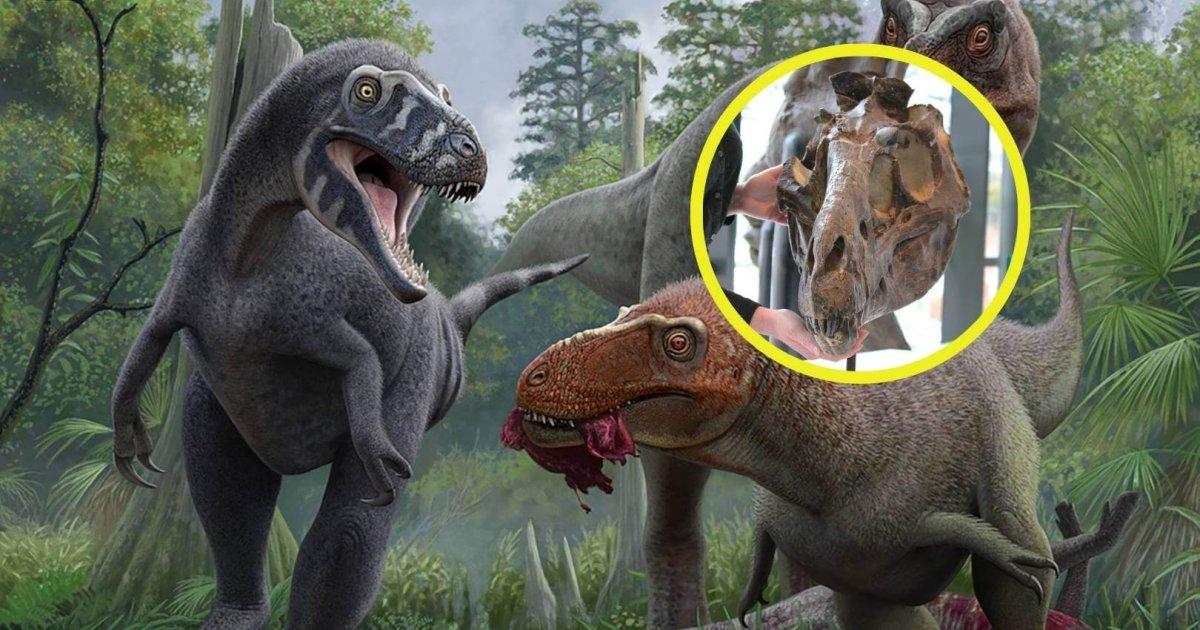
A small forgotten bone has solved the mystery of Nanotyrannus, confirming that it was not a juvenile T. rex, but a different, mature carnivore species.A new study confirms this.
For decades, the world of paleontology has been divided over a question that, seemingly trivial, has had a major impact on the understanding of the environment of the Cretaceous period: did Nanotyrannus really exist as a separate species from the giant Tyrannosaurus rex, or was it just an adolescent version of this legendary predator?
Controversy has been alive since the end of the 20th century, centered on conflicting discoveries and a serious degradation of evidence.But now, research published in the journal Science and led by an interdisciplinary team based at the Cleveland Museum of Natural History and the University of Cleveland may end this division once and for all.
The secret isn't in a giant skull or menacing claws.The answer, surprisingly, resides in the small bone in the throat.
A controversial fossil from the start
The story began in 1942, when a group from the marine history museum found a very interesting stone in Montana, in the Hard Hall Creek formation.The piece was sent to the Smithsonian, when it was designated a Gorgosaurus specimen.In the following years, in 1988, the reference was paid with the name Nanotyrannus Landensis, "the small complex of course structure", due to its reduced features but to the features of a tyrannosaurus.
But doubts soon began to arise: over time, the scientific community began to suspect that it was, rather, a juvenile T. rek. How to distinguish a young carnivore that has not yet reached its adult size, from a smaller but fully grown species?
The central problem is that there are no other bones associated with the skull.Without long bones like femurs or ribs - often analyzed to determine the age of dinosaurs - determining the maturity of their bones would be nearly impossible.So for more than 30 years, Nanotyrannus lived in taxonomic limbo, caught between authenticity and confusion.
Illusions that rewrite history
The key to solving the mystery has been there all along, but no one has looked too close to it: a tiny, thin hydeid bone in a museum.In general, assembled muscles and in some cases speech (humans), but rarely entered dinosaur studies.
That changed when Princeton University Paleontogist Christopher Griffin thought of a bold approach: What if the bones could show the growth rate of those limbs, like a tree's growth rate?
Together with researchers at the Cleveland Museum of Art, as well as other institutions such as the Los Angeles Museum of Natural History and the University of Nebraska, the team developed a pioneering histological technique.After validating the method with hyoids from crocodiles, birds, and other dinosaurs, they examined microscopic sections of Nanotyrannus bone... and it was a big surprise.
The hyoid bone had a clear pattern of closely spaced growth lines, indicating that the animal had stopped growing.In other words, it was an adult.
What does it mean for paleontology?
The discovery not only confirms the authenticity of the genus Nanotyrannus, but also reconstructs the picture of the Upper Cretaceous ecosystem that we have.For many years it was thought that tyrannosaurs were the only large predators in their environment, but it is now clear that there was at least a second type of predator, smaller, more agile, and possibly with different habits.According to a study published in October.
Nanotyrannus would have been 5.5 meters long, compared to T. Rex more than 12 meters.Clearly, it was no small animal.Its light build and skeletal maturity suggest it was an efficient predator, able to compete with a young T. Rex for the same resources.
This introduces a new dimension in reconstructing the food chain of their time: two predators, of different sizes but coexisting in the same geographical space, with possible changes in diet, prey and behavior.
Furthermore, this study offers a new method of paleobiogical dating.Using heid as an indicator of maturity can open the door to the analysis of many other fossils that have not been preserved.For paleoposis figures, this is a revolutionary tool, especially in ancient collections where many designs are based on irregular skulls or skeletons.
Another amazing thing about the research was this.It wasn't an industry breakthrough or a surprising discovery, but it was a leading lady that had been around for almost 80 years.Thanks to the joint work of museums, universities and experts in various branches - from the source to comparative anatomy - decades that positive scientists have been solved for decades.
More than science, the Nanotyrannus case is a lesson in the value of reclaiming what is known with new technologies and an open mind.It is not always necessary to find a new fossil to make a discovery;sometimes you need to look at it again, with fresh eyes and different questions.
In this study, Nanotmanas is the "brother" of T. Rexus Rexus "and takes its rightful place in the history of being in the world together.
Thus, what seemed to you like a tiny finger-sized piece of key turned out to be the key to writing an entire page of dinosaur history.
- C.S.gree.greety Alranapa of Tyranaano Co-Chress The Tyranlououo Rxe Rxe 4 45.12.12.12.12.12.12.12.12.12.12.
- Zanno, l.e., Naples, j.g.Nanotyrannus and Tyrannosaurus are closely related to the Cretaceous.Nature (2025).DOI: 10.1038/S41586-025-09801-6