

 Dec 13, 2025
 3 min read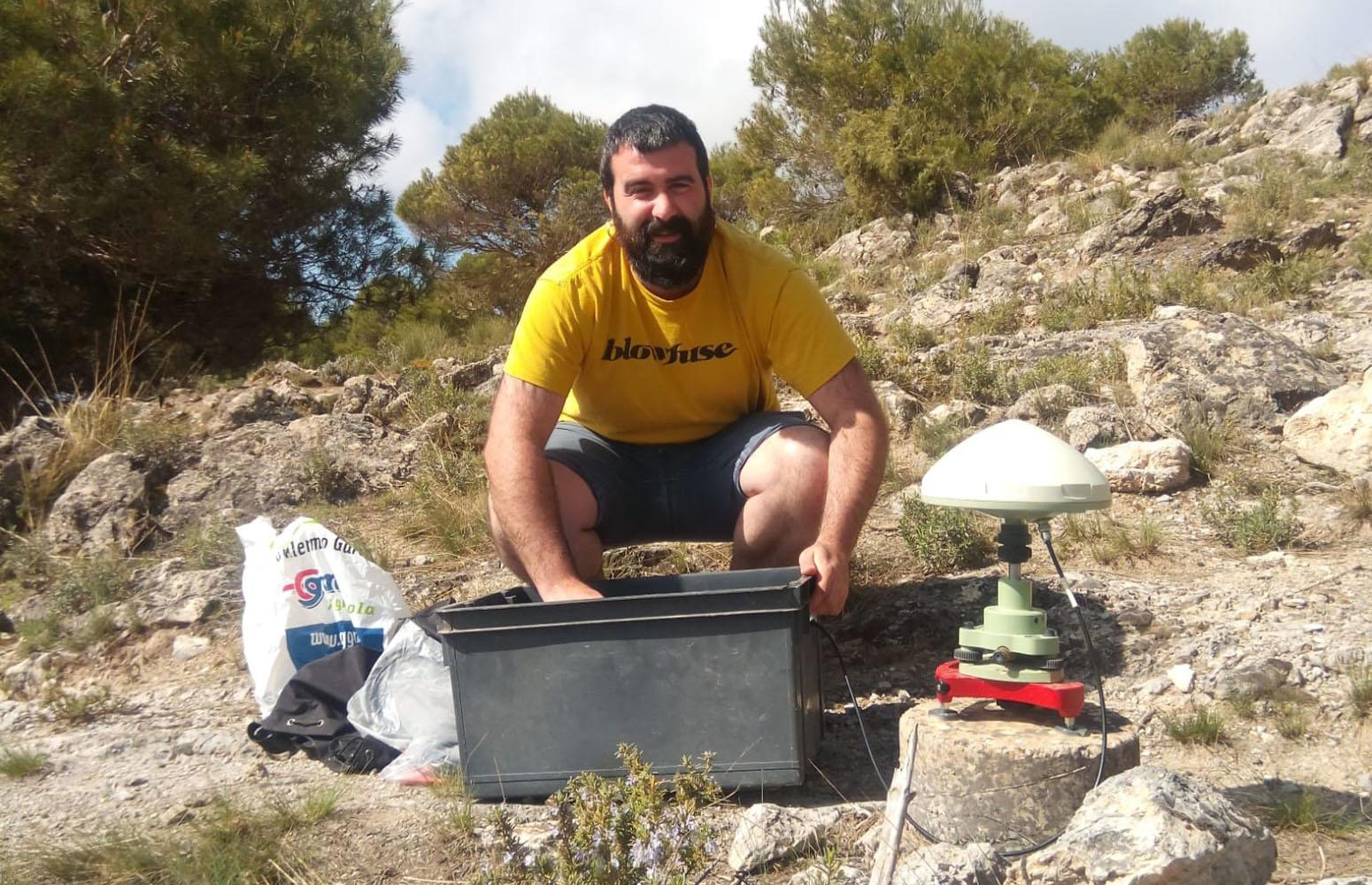
Asiier Madariea, investigate the Grop in the university of the school of the eartacic conscious location of the eartickes or eartaccukes.
New geodynamic data show that the Iberian Peninsula rotates clockwise
Recent seismic and satellite records reveal the way in which the Eurasian and African plates fit together, as well as the possible consequences of their collision on the Iberian Peninsula.
First publication date: 10/12/2025
Tectonic plates can be thought of as large mobile fragments that lie on the Earth's surface.The continuous movement of these plates generates significant tensions, which manifest themselves in the form of deformation or earthquakes in their borders.explains a researcher at the country's University of Vasque/Euskal Herriko Unibertsitatea.
In the western Mediterranean, the Alboran Range mainly defines the structure of the boundary between the Eurasian and African plates.This region moves westward and supports the development of the active Gibraltar Arc, which connects the border of the Betic Mountains with the border of the Rif Mountains."Until now, we did not know the nature of the boundary of this region, and the geodynamic processes occurring there are a matter of debate," says Madarietta.
In a study led by researchers from , the most important dynamic process that develops in this diffuse boundary between the Eurasian and African plates was characterized: "We analyzed the relationship between the tension of the Earth's crust and the surface deformation in the western sector of the Mediterranean, at the boundary between both plates located between the Iberian Peninsula and Northwest Africa Process Research," explains (IDH).To do this, they calculated the stress and strain fields in the region "from earthquake data recorded in recent years and information on strains obtained from satellite data."
New data to improve analysis
The comparison between these two aspects allows a more complete understanding of geodynamic and tectonic processes.The study obtained a lot of new data on the border between the Eurasian and African plates, which allows "a better definition". In this way, we can determine the segment of the border that has been affected by the collision between Eurasia and Africa and the one that remains in the western part of the ARC Gibraltar ARC, explained MADarieta.
"New data confirm that the Iberian Peninsula rotates clockwise," he noted. "It is clear from the data obtained that the Gibraltar Arc plays an important role on the boundary between Eurasia and Africa. The deformation caused by the collision of Eurasia and Africa east of the Strait of Gibraltar is absorbed by the crust of the Gibraltar Arc, which prevents the transfer of these forces to the Iberian Peninsula. Plate (Eurasian Plate) and the African Plate, whichwe believe it could be beneficial to transfer the effort to southwestern Iberia "This will push the peninsula through the aforementioned area and rotate it clockwise."
The stress fields provide When there is significant change or where earthquakes occur, but we do not know which tectonic structures are active in these areas.These new stress and deformation fields tell us where we need to go to find these structures.In this way, we will know what types of fences and faults, how they move, what types of earthquakes they can reach, and what they can reach.
The database of Iberian Land Traders (TEI) is growing in the Iberian Peninsula.Despite the great work done, especially in the west of the Pyrenees (Navarra) until now they are carried out in different areas, in the forty part of Gibraltar between CADIZ and Seville.Therefore, it is necessary to carry out detailed geological and geological studies in these areas to identify and evaluate the potential of the exchange actor's deposits", says Madieta.
The little parent of evolution
Geodynamic changes are known from satellite data, and accurate, seismic records, for their part, are still new. «These data provide only a small window of geological evolution.
The researchers said the database generated in the study complements previously used databases, which "helps to increase the reliability of the results and conclusions."From now on, "data will grow rapidly."Among other things, deformations can be calculated more accurately even in areas where the available information is limited."
Asier Madarieta Txurruka is a researcher from the Department of Geology at EHU.This research was funded by the Basque Government, which grants the researcher a scholarship to develop his postdoctoral research.With this help, Madarieta participated in a period at the University of Palermo.In addition to Madarieta, the study was carried out in collaboration with a research team from the University of Palermo and the University of Granada, among other institutions.
- News in the strong gateymics of Ibeya and Northwast afarva from Seismis Stress and GeonderS
- Gondwana exploration
- DOI: 10.1016/j.gr.2025.08.020